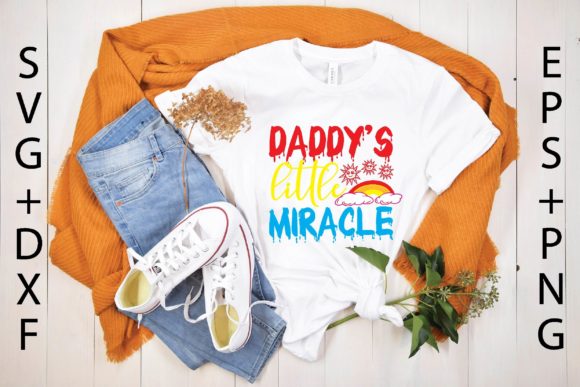
Daddy’s Little Miracle SVG: A Designer’s Review
As an embroidery designer who has spent years digitizing files and testing them on everything from thick denim to delicate baby knits, I approach every new machine embroidery design with a mix of curiosity and skepticism. We have all seen the flood of digital assets online, but few stand up to the rigors of actual stitching. When I first pulled up the Daddy’s Little Miracle Svg file on my screen, I was not just looking at pixels; I was visualizing thread paths, tension issues, and the final tactile experience of the finished product.
This is not merely a graphic for a printer. It is a blueprint for a physical object. In this review, I am evaluating how this specific embroidery file translates from a digital concept into a tangible, high-quality item for small business owners, Etsy sellers, and hobbyists alike.
First Impressions and Visual Personality
The immediate mood of the Daddy’s Little Miracle Svg is tender yet bold. The typography suggests a modern, clean aesthetic that avoids the overly cursive or cluttered styles that often plague baby-themed designs. For a designer, clarity is king. If the lines are too close together, the needle will punch through the same spot repeatedly, causing thread breaks or fabric puckering. This design appears to have sufficient spacing between elements, which is crucial for maintaining stitch integrity.
The theme is universally appealing, targeting the emotional core of parenthood. However, from a technical standpoint, I look at the balance of positive and negative space. A well-balanced design allows the fabric to breathe. This layout seems optimized for visibility, meaning it will read well even from a distance, making it ideal for custom apparel like sweatshirts or tote bags where the message needs to be instantly recognizable.
Real-World Application: The Baby Onesie Test
To truly understand the value of this asset, let us walk through a real-life scenario. Imagine you are preparing a custom order for a client who wants a personalized gift for a newborn. You choose a soft, organic cotton onesie. This is a tricky substrate. It is stretchy, thin, and prone to distortion.
Using the Daddy’s Little Miracle Svg here requires caution. Because the design is likely intended as a cutting file compatible with software like Cricut or Silhouette, you must ensure your embroidery software correctly interprets the shapes into stitch types. If you are converting this SVG into an embroidery format, you need to decide between a satin stitch for the text borders or a fill stitch for larger graphical elements. For a baby item, I would recommend keeping the stitch density low to prevent the garment from becoming stiff or uncomfortable against sensitive skin.
If used correctly, this design elevates a simple onesie into a cherished keepsake. It transforms a basic handmade product into something with emotional weight. Customers do not just buy the shirt; they buy the sentiment. That is where the true value lies for any craft business.
Versatility Across Product Lines
While the primary association might be infant wear, the versatility of this graphics asset extends further. Consider a heavy canvas tote bag design. The sturdy fabric can handle higher stitch counts and denser fills. Here, the Daddy’s Little Miracle Svg could be enlarged significantly without losing definition. It becomes a statement piece for a diaper bag or a library tote.
For Etsy sellers looking to diversify, consider applying this to home decor. A neutral-colored pillow cover with this embroidered phrase adds a subtle, heartfelt touch to a nursery. It works equally well on a kitchen towel, creating a unique holiday embroidery gift for new grandparents. The key is adapting the scale. What looks perfect on a chest pocket might overwhelm a small corner of a handkerchief.
It is also worth noting that while this falls under T-Shirt Designs in many marketplaces, its application in commercial embroidery should not be limited to knitwear. Think about structured items like caps. Embroidering on a curved surface like a hat brim requires careful hooping and often a different approach to stabilizer usage. If the design has wide, flat areas, it may require additional backing to prevent sinking into the foam or fabric of the cap.
Technical Considerations and Pitfalls
No design is perfect for every situation. There are specific scenarios where you should use the Daddy’s Little Miracle Svg with care. First, avoid using it on extremely textured fabrics like fluffy fleece or terry cloth without a strong topping stabilizer. The stitches can get lost in the pile, rendering the text illegible.
Second, pay attention to small details. If the SVG contains tiny serifs or intricate flourishes, these may not translate well into thread. Thread has thickness; it cannot replicate the precision of a laser printer. You may need to simplify certain elements in your digitizing software to ensure the stitch density does not become too high in confined spaces. High density leads to puckering, especially on lighter fabrics.
Dark fabrics present another challenge. If you are stitching light thread on a black sweatshirt, you must ensure there are no gaps in the coverage. A running stitch outline might not be enough; you may need a solid fill to make the design pop. Always test your thread color contrast before committing to the final piece.
Practical Notes for the Modern Maker
Before you list this as a digital embroidery file or start production on a batch of goods, follow these practical steps:
- Test on Scrap Fabric: Never run a new design directly on your final product. Use the same type of fabric and stabilizer to check for registration issues.
- Check Licensing: Since this is an instant download cutting file, verify the license terms. Can you sell finished physical items? Can you resell the digital file? Most designers allow commercial use for physical products but restrict digital redistribution.
- Hoop Size Compatibility: Ensure the design fits within your machine’s maximum hoop size. If you need to resize it, maintain the aspect ratio to prevent distortion.
- Stabilizer Selection: Match your stabilizer to your fabric. Cut-away stabilizer is best for stretchy knits, while tear-away works for woven cottons.
- Mockup Testing: Create printable mockups to visualize how the design looks on different colored garments. This helps in marketing your small shop product effectively.
Final Verdict on Design Value
The Daddy’s Little Miracle Svg is a strong contender for any designer’s library. Its strength lies in its emotional resonance and clean layout. For the embroidery project to succeed, however, the maker must bridge the gap between digital file and physical thread. It is not enough to simply load the file; one must understand the interplay of needle, thread, and fabric.
When executed with proper technique, this design enhances brand consistency and customer trust. It shows that you care about quality, not just speed. Whether you are creating a personalized gift for a friend or stocking your online store with design assets for sale, this file offers a solid foundation. Just remember to respect the material limits of your chosen substrate and always prioritize stitch clarity over complexity. In the world of handmade goods, simplicity often speaks the loudest.