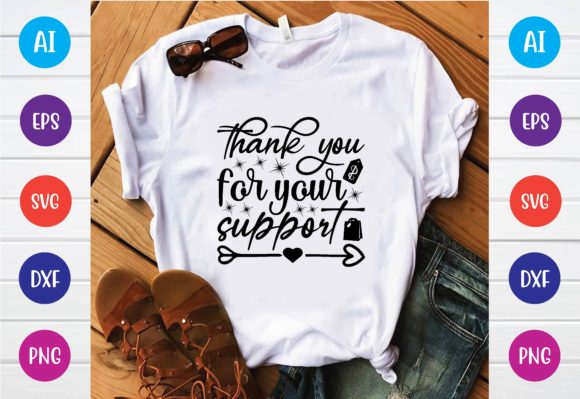
Reviewing the Thank You for Your Support SVG for Embroidery
As a designer who has spent countless hours digitizing files and troubleshooting stitch-outs, I approach every new machine embroidery design with a critical eye. We are not just looking for pretty shapes; we are looking for structural integrity, visual balance, and commercial viability. Recently, I evaluated the Thank You for Your Support Svg, a graphic asset that is increasingly popular among crafters and small business owners. While marketed primarily as a cutting file for machines like Cricut and Silhouette, its potential in the embroidery world deserves a closer, more practical look.
First Impressions: Mood and Visual Personality
The first thing that strikes you about this design is its inherent warmth. The phrase "Thank You for Your Support" carries emotional weight, especially in the context of small businesses, content creators, and community builders. Visually, the layout tends to be clean and legible, which is crucial when translating a digital Graphics file into thread. The mood is professional yet personal, making it an ideal candidate for items meant to foster connection between a brand and its audience.
However, from an embroidery standpoint, SVGs are vector-based outlines. This means they lack the inherent stitch data—such as satin stitch widths, fill stitch angles, or running stitch paths—that a dedicated embroidery file provides. If you are planning to use this SVG for embroidery, you are likely looking at creating an applique or manually digitizing the text. For those using it as a template for hand-guided machine work or as a base for an applique design, the clarity of the lines is a significant advantage.
Real-World Application: The Custom Tote Bag Scenario
To test the viability of this design, I imagined a real-life scenario: a local boutique owner wants to create a limited run of canvas tote bags for their loyal customers. These aren't just any bags; they are heavy-duty, textured cotton canvases intended for daily use. The goal is to produce a handmade product that feels premium and appreciative.
In this context, the Thank You for Your Support Svg works beautifully as a central focal point. If digitized correctly, the text can be rendered in a bold, sans-serif font using dense fill stitches to ensure durability against the rough texture of the canvas. Alternatively, if used as an applique template, the SVG guides the placement of a contrasting fabric patch, which is then secured with a satin stitch border. This method reduces stitch density on the final garment, preventing the stiff, cardboard-like feel that often plagues large text designs on flexible fabrics.
For T-Shirt Designs, the approach changes. A direct embroidery of thick text on a thin jersey knit can cause puckering. Here, the SVG serves as a guide for a lighter touch—perhaps a simple running stitch outline or a delicate satin stitch if the font allows. The key is adapting the design to the fabric texture and stretch properties of the garment.
Navigating Technical Challenges and Fabric Constraints
While the sentiment is universal, the execution requires careful consideration of technical constraints. One major area where designers must exercise caution is with small hoop sizes and curved surfaces. If you are attempting to place this design on a cap or a baby onesie, the curvature of the fabric can distort long horizontal text. The phrase "Thank You for Your Support" is relatively long, so breaking it into two lines or stacking the words creatively is often necessary to fit within standard hoop size limits without compromising readability.
Another critical factor is thread colors and contrast. On dark fabrics, light threads pop, but they also show every imperfection in tension. On light fabrics, dark threads provide definition but can cast shadows if the stitch density is too high. I always recommend testing the design on scrap fabric first. Check how the letters interact with the background. If the SVG includes intricate flourishes or thin serifs, these may not translate well into thread unless significantly simplified during the digitizing process. Tiny details can get lost or break easily during washing, reducing the longevity of your finished product.
For baby embroidery or items that require frequent washing, durability is paramount. Avoid overly dense fills that can make the fabric rigid. Instead, consider using a combination of satin stitches for borders and lighter fill patterns for larger areas. Always use a proper stabilizer—cut-away for stretchy knits and tear-away for stable wovens—to support the stitches and prevent distortion.
Commercial Value and Brand Consistency
For Etsy sellers and craft business owners, the perceived value of a product is heavily influenced by its presentation. A well-executed embroidery project signals quality and care. Using a recognizable and heartfelt message like "Thank You for Your Support" can enhance customer trust and encourage repeat business. It transforms a simple item into a personalized gift that resonates emotionally with the recipient.
When incorporating this design into your design assets library, consider how it aligns with your brand identity. Does the font style match your existing logo? Is the tone consistent with your other products? Consistency builds recognition. Whether you are creating holiday embroidery gifts, custom apparel for staff, or embroidered patch merchandise for a craft fair, the design should feel like a natural extension of your brand voice.
It is also worth noting the distinction between personal and commercial use. Since this is an instant download cutting file, licensing terms can vary. Before selling finished items or using the design in client projects, always confirm the license agreement. Some creators allow unlimited commercial use for physical products, while others may restrict digital resale or require attribution. Protecting your business starts with respecting intellectual property rights.
Practical Designer Notes for Best Results
- Test on Scrap Fabric: Never stitch directly on your final garment. Use a similar fabric weight and type to check tension and registration.
- Check Contrast: View your design in black and white mockups to ensure the text remains legible regardless of thread color choices.
- Mind the Density: High stitch density can cause puckering on thin fabrics. Adjust your digitizing settings to reduce pull and push factors.
- Verify Hoop Size: Ensure the design fits comfortably within your machine’s hoop, leaving enough margin for clamping and stability.
- Inspect Small Details: Zoom in on the SVG to identify any tiny elements that may need simplification for embroidery.
- Confirm Licensing: Read the product description carefully to understand usage rights for commercial sales.
In conclusion, the Thank You for Your Support Svg is a versatile asset that, when handled with technical precision, can elevate a wide range of embroidery projects. From sturdy tote bags to delicate baby items, its success lies in the adapter’s ability to translate vector lines into durable, aesthetically pleasing threadwork. By paying attention to fabric choice, stitch density, and brand alignment, you can create products that not only look professional but also convey genuine appreciation to your customers.