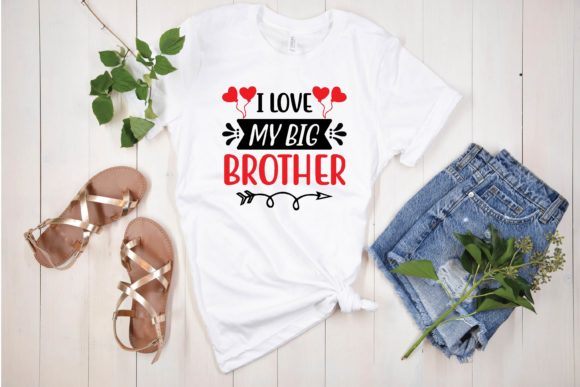
Reviewing the I Love My Big Brother SVG for Embroidery
As a designer who spends half my life digitizing files and the other half stitching them out, I have learned that not every graphic translates well to thread. When I first encountered the I Love My Big Brother Svg, my initial reaction was cautious optimism. The concept is timeless—sibling pride is a massive seller in the handmade market—but the execution determines whether a design ends up as a cherished keepsake or a puckered mess on a customer’s doorstep. This review breaks down how this specific graphic holds up when moved from the screen to the needle, focusing on real-world application for crafters and small business owners.
First Impressions and Visual Personality
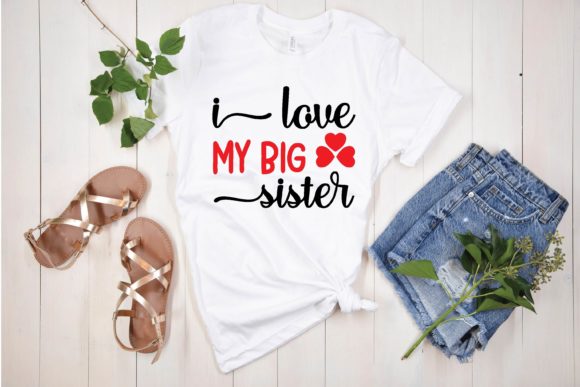
The mood of this design is playful yet structured. It carries a sense of familial warmth without leaning too heavily into cutesy clutter, which is often where sibling designs fail. The layout appears balanced, with a clear hierarchy between the text and any accompanying graphical elements. For an embroidery project, this clarity is vital. When you are working with thread, you do not have the infinite resolution of a printer. Every curve and corner must be deliberate.
From a visual standpoint, the design feels versatile. It does not scream "baby only," which expands its potential market. While it is certainly appropriate for baby embroidery on onesies, the clean lines allow it to work on older children’s apparel or even adult novelty wear. This flexibility is crucial for Etsy sellers and boutique owners who want to maximize the return on their design assets. A design that can be sold across multiple age demographics is inherently more valuable than one restricted to a single niche.
Real-World Application: The Sweatshirt Test
To truly evaluate a file, you have to imagine it on fabric. I recently considered a similar concept for a custom order involving a heavyweight cotton sweatshirt. The client wanted a personalized gift for a young girl who had just become a big sister. The I Love My Big Brother Svg would have been an ideal candidate here, but with caveats.
On a thick fabric like fleece or heavy cotton, stitch density becomes your primary concern. If the original graphic has dense areas, they need to be carefully managed during the digitizing process. For this type of garment, I would recommend using a combination of satin stitch for borders and fill stitch for larger solid areas, ensuring the underlay is robust enough to prevent the fabric from showing through. However, because this is provided as an SVG intended for cutting machines like Cricut or Silhouette, the end-user must ensure they are using a properly digitized machine embroidery file, not just importing the vector directly into embroidery software without adjustment. Importing a cut file directly often results in excessive stitch counts and poor pathing.
Adapting for Different Products
Beyond sweatshirts, this design shows promise for several other popular items:
- Tote Bag Design: The bold nature of the text works well on canvas. Just ensure the hoop size is large enough to accommodate the full width without distortion.
- Embroidered Patch: This is perhaps the safest bet. By creating a merrowed edge or a tight satin border, you can turn this into a standalone patch that can be ironed onto jackets, backpacks, or hats. This mitigates issues with fabric stretch.
- Caps and Hats: Use caution here. Curved surfaces distort designs. If the text is long, it may wrap awkwardly around the front panel of a cap. Smaller, centered placements work best for headwear.
- Kitchen Towels and Aprons: For holiday embroidery or family gathering gifts, placing this on a waffle-weave towel adds a charming touch. Ensure you use a strong stabilizer, as towels are prone to shifting.
Technical Considerations for Stitching
When preparing this design for production, several technical factors come into play. First, consider the stitch density. If the design includes small details or tiny lettering, these may not stitch out cleanly on lower-end home machines. It is always wise to test the design on scrap fabric first. Look for thread breaks or bird nests, which indicate the digitizer may have created sharp turns or overly dense clusters.
Thread color contrast is another critical element. Since this is likely a text-heavy or graphic-heavy design, choosing thread colors that pop against the fabric is essential. On dark fabrics, light threads provide readability, but you must ensure the underlay covers the base material completely. On light fabrics, darker threads offer definition. I recommend testing the design in black and white mockups before committing to expensive rayon or polyester threads. This helps you see if the design relies too much on color for definition rather than shape.
Stabilizer choice cannot be overstated. For stretchy fabrics like t-shirts, a cut-away stabilizer is non-negotiable to maintain the integrity of the I Love My Big Brother Svg after washing. For woven fabrics like denim or canvas, a tear-away may suffice, but hooping technique must be precise to avoid registration errors.
Commercial Viability and Brand Consistency
For the commercial embroidery sector, consistency is key. Customers trust brands that deliver high-quality finished products. A poorly stitched design damages that trust instantly. This particular graphic, when handled correctly, offers a professional look that enhances brand perception. It is simple enough to be recognizable from a distance, which aids in buyer engagement on platforms like Etsy.
However, before listing this as a digital embroidery file or selling finished items, you must verify the licensing terms. The product description notes it is an instant download compatible with cutting software. It does not explicitly state commercial rights for embroidery. Always confirm whether the license allows for the sale of physical goods or if it is for personal use only. Ignoring this step can lead to legal issues for your craft business.
Final Verdict for Makers
The I Love My Big Brother Svg is a solid addition to a designer’s library, provided it is treated with the respect it deserves during the digitizing and stitching phases. It is not a "load and go" solution for complex fabrics, but for standard applications like patches, tote bags, and stable garments, it performs admirably.
My advice to fellow makers is to start small. Stitch it out on a medium-weight cotton with a standard stabilizer. Check the corners of the letters. Inspect the transitions between shapes. If the sample looks clean, scale up to more challenging projects. Remember, the value of a handmade product lies in the care taken during its creation. This design gives you a great foundation, but your skill in handling thread, tension, and fabric texture will ultimately determine its success.
Whether you are creating a personalized gift for a neighbor or stocking your small shop with seasonal inventory, this graphic offers a reliable, heartwarming option. Just keep your needles sharp, your stabilizers ready, and your expectations realistic regarding the limitations of converting cut files to embroidery formats.