Reviewing November 1978: 47 Years of Awesome
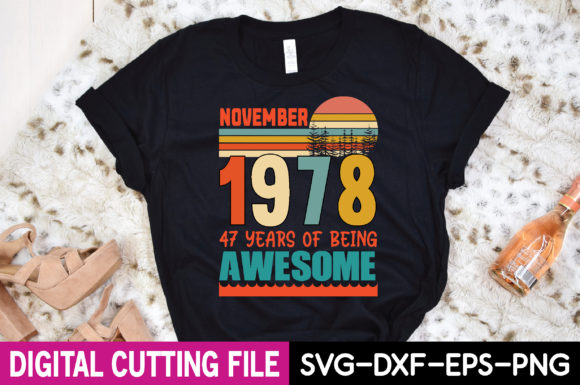
As a designer who spends half my life digitizing and the other half stitching, I have learned that not every graphic translates well to thread. When I first pulled up the November 1978 47 Years of Being Awesome file, my initial reaction was one of cautious optimism. Birthday designs are a staple in the craft business, but they often suffer from cluttered layouts or fonts that vanish under stitch density. This particular piece, however, strikes a balance between celebratory flair and structural integrity, making it a strong candidate for both personal projects and commercial inventory.
First Impressions and Visual Personality
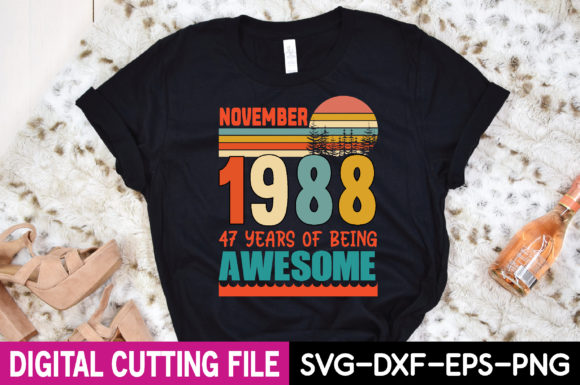
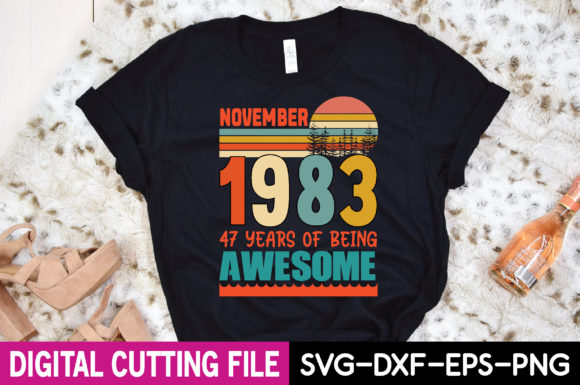
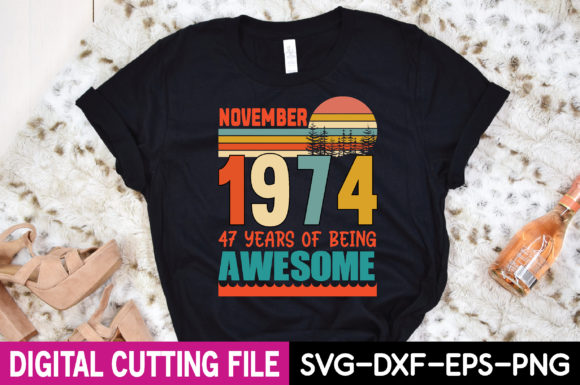
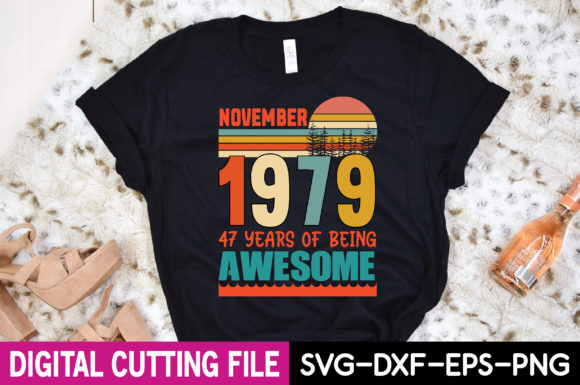
The mood of this design is undeniably confident. It does not shout; it asserts. The typography suggests a retro-modern aesthetic that appeals directly to the demographic hitting their late forties—a group that values nostalgia but refuses to feel "old." From a visual standpoint, the layout is clean. For an embroidery designer, white space is just as important as the stitches themselves. This design allows the fabric to breathe, which is crucial when working with textured materials like terry cloth towels or heavy denim.
When evaluating T-Shirt Designs or any Graphics intended for needlework, I look for clear lines and manageable color transitions. This design offers a straightforward composition that avoids the pitfalls of overly complex gradients, which can look muddy when converted into thread. It feels ready for immediate use, provided you respect the limitations of your machine and hoop.
Real-World Application: The Custom Sweatshirt Test
To truly understand how a file performs, you must imagine it on a finished product. I recently considered this design for a custom order: a high-quality, heather grey crewneck sweatshirt for a client’s husband. The goal was a personalized gift that felt boutique-quality, not like a mass-produced souvenir.
In this scenario, November 1978 47 Years of Being Awesome shined. Placed on the left chest, the design acted as a subtle badge of honor. Because the elements are distinct, the stitch definition remained sharp even on the slightly fuzzy surface of the cotton blend. If I were to scale this up for a full-back print on a tote bag, the readability would hold up equally well. The design’s versatility allows it to transition from a small embroidered patch on a cap to a central feature on a pillow cover without losing its impact.
For Etsy sellers and small shop owners, this adaptability is key. You are not limited to one product type. This same digital embroidery file can anchor a line of holiday gifts, such as aprons for the home chef or tea towels for the kitchen enthusiast. The theme is evergreen for anyone born in that month, ensuring your inventory remains relevant year after year.
Technical Considerations for Stitching
While the design is robust, practical embroidery requires attention to detail. Here is how I approach stitching this specific artwork:
- Fabric Texture and Stability: On stretchy fabrics like jersey knits, a cut-away stabilizer is non-negotiable. The weight of the thread can cause puckering if the base is not supported. For woven fabrics like canvas tote bags, a tear-away might suffice, but I always prefer a medium-weight cut-away for longevity.
- Stitch Density and Type: Although the source files are SVG, PNG, DXF, and EPS, remember that these are vector graphics intended for printing or cutting. To use this for machine embroidery, you must ensure you have a properly digitized version or use software to convert it, paying close attention to stitch types. Large text areas should utilize a fill stitch with appropriate underlay to prevent gaps, while borders may benefit from a satin stitch for crisp edges.
- Thread Color Contrast: This design relies on legibility. When stitching on dark fabrics, ensure your thread colors have high contrast. A test run on scrap fabric is essential to verify that the "Awesome" text does not blend into the background. I recommend testing in black and white mockups first to judge value contrast before committing to colorful threads.
- Hoop Size Constraints: Always check your hoop size against the design dimensions. If you are working with a 4x4 hoop, you may need to resize the design, which could affect the stitch density. Ensure that resizing does not make the text too small to read or the stitches too dense for the fabric.
Navigating Potential Pitfalls
No design is without its challenges. When working with November 1978 47 Years of Being Awesome, be mindful of curved surfaces. Embroidering on a cap requires careful hooping and possibly a different digitizing approach than flat apparel. The curvature can distort the text if the design is too wide. In such cases, consider splitting the design or reducing its width to maintain proportion.
Additionally, tiny details can get lost. If the original graphic includes fine lines or small decorative elements, they may not translate well into thread. A running stitch might break, or a satin stitch might become too narrow to cover the fabric effectively. Inspect the design at 100% zoom. If elements look fragile, simplify them or increase their stroke width before digitizing.
For items that will undergo frequent washing, such as baby clothes or kitchen towels, durability is paramount. Ensure that your stitch density is sufficient to withstand agitation but not so high that it perforates the fabric. A balanced approach ensures the finished product remains soft and intact after multiple wash cycles.
Commercial Value and Brand Consistency
For the commercial embroidery professional, this design adds value through its emotional resonance. Birthdays are milestone events, and customers are willing to pay a premium for items that feel special and personalized. By offering this design on high-quality blanks, you elevate your brand perception.
Consistency is vital. If your shop specializes in modern, clean aesthetics, this design fits seamlessly. However, if your brand leans towards rustic or vintage distressed looks, you might need to adjust the thread choices—perhaps using variegated threads or matte finishes—to align with your overall vibe. Always consider how this asset fits into your broader catalog of design assets.
Before listing this as a small shop product, confirm the licensing terms. The product description mentions instant download of SVG, PNG, DXF, and EPS files, which are typically used for printing or cutting. If you intend to sell embroidered items, ensure you have the right to use the design for commercial embroidery purposes. If the license is unclear, contact the creator. Protecting your business from copyright issues is as important as the quality of your stitching.
Final Verdict for Makers
In conclusion, November 1978 47 Years of Being Awesome is a versatile and engaging design that holds up well in real-world applications. It offers a blend of nostalgia and modern style that appeals to a broad audience. Whether you are creating a tote bag design for a local market or a sweatshirt embroidery piece for a private client, this graphic provides a solid foundation.
Remember to test on scrap fabric, choose your stabilizer wisely, and respect the limitations of your equipment. With careful execution, this design can become a reliable staple in your repertoire, driving engagement and satisfaction among your customers. It is a reminder that great embroidery is not just about the machine, but about the thoughtful application of design to fabric.