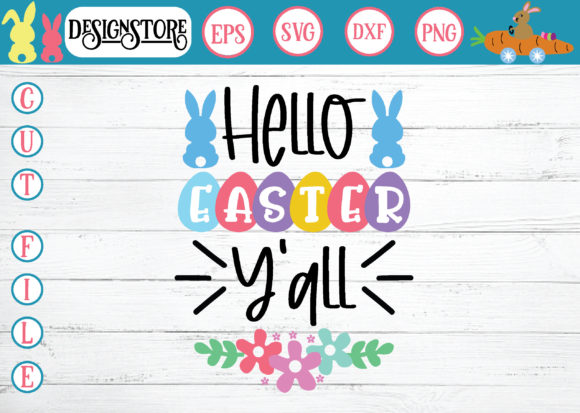
Reviewing Hello Easter Y All SVG for Embroidery
As a designer who spends half my life digitizing and the other half stitching, I have learned that not every cute graphic translates well to thread. We often see T-Shirt Designs and digital Graphics that look crisp on a screen but turn into a tangled mess under the needle. That is why I took a close look at the Hello Easter Y all Svg to determine if it holds up in a real-world embroidery environment. This isn’t just about whether the file opens correctly; it is about how the design behaves when subjected to the physical constraints of fabric, hoop tension, and stitch density.
First Impressions and Visual Personality
The first thing that strikes me about Hello Easter Y all Svg is its casual, welcoming energy. The phrase itself suggests a Southern charm or a relaxed, friendly vibe that fits perfectly with spring celebrations. Visually, the layout appears balanced, which is crucial for embroidery. When we talk about machine embroidery design suitability, we are looking for clear lines and adequate spacing. This design seems to offer a playful typography style that avoids overly intricate serifs or tiny, fragile details that might get lost in the stitching process.
The mood is lighthearted and festive without being cluttered. For an embroidery project, this simplicity is a strength. It means the design can breathe on the fabric, allowing the texture of the thread to enhance the message rather than competing with excessive detail. Whether you are aiming for a rustic farmhouse aesthetic or a modern minimalist look, this graphic has the versatility to adapt, provided you choose your thread colors wisely.
Real-World Application: The Custom Tote Bag Scenario
To truly test the viability of this design, I imagined a common scenario for many Etsy sellers and craft business owners: creating a set of custom tote bags for a spring market. Canvas is a forgiving fabric, but it has a distinct weave that can swallow small details. Using Hello Easter Y all Svg here requires careful consideration of scale.
If I were stitching this onto a natural cotton tote, I would likely opt for a bold satin stitch border around the letters if the digitized version allows, or a dense fill stitch to ensure the text pops against the textured background. The "Y all" portion adds a personal touch that customers love in a personalized gift. It transforms a generic holiday item into something that feels handcrafted and thoughtful. The visual appeal here directly impacts product value; a clean, legible design signals professionalism and builds customer trust.
However, because this listing includes SVG, PNG, DXF, and EPS files, it is primarily marketed for printing or cutting. For embroidery, you must ensure you have a properly digitized embroidery file derived from these vectors. If you are converting it yourself, pay close attention to the connecting bridges between letters to prevent thread breaks.
Navigating Fabric and Hoop Constraints
One of the biggest challenges with typography-based designs is handling curved surfaces and stretchy materials. Let’s say you want to use this for sweatshirt embroidery or a baby onesie. These fabrics require a different approach than a stiff canvas bag.
For a sweatshirt, the pile of the fleece can obscure thin lines. You would need to increase the stitch density slightly or use a contrasting underlay to make the Hello Easter Y all Svg stand out. On a baby item, comfort is paramount. You must avoid dense areas that feel scratchy against sensitive skin. In this case, using a lightweight stabilizer and perhaps simplifying the fill to a lighter pattern would be wise. Always test the design on scrap fabric first. What looks good on a monitor might pucker on a knit fabric if the tension isn't adjusted.
Cap embroidery is another tricky area. The curved surface of a baseball cap distorts designs. If you attempt this on a hat, keep the size moderate. Large designs can warp, and the curvature might make the "Hello" and "Y all" appear uneven. A smaller hoop size placement on the side or back of the cap might work better than a large front-center placement.
Color Theory and Thread Selection
The success of any holiday embroidery piece relies heavily on color contrast. Since this is a spring-themed design, pastels are the obvious choice. However, pastel threads on light fabrics can lack definition. I recommend testing the design in black and white mockups first to check for clarity. If the design loses its shape in grayscale, it will likely struggle in low-contrast thread combinations.
Consider using vibrant thread colors like coral, mint, or sky blue against a white or navy background. Dark fabrics present their own challenges; you may need a thicker underlay to prevent the fabric color from showing through the stitches. This is especially true for custom apparel where the garment color varies. Always verify how the design interacts with different backgrounds to maintain brand consistency across your product line.
Commercial Use and Licensing Considerations
For small shop product creators and commercial embroidery professionals, understanding licensing is non-negotiable. The product description states it is an instant download with high-resolution files suitable for various prints. However, it does not explicitly detail the license terms for selling finished embroidered goods. Before you list these items on your store or at a craft fair, you must confirm whether the creator allows commercial use of the finished physical products.
Using a design without proper clearance can lead to copyright issues that jeopardize your design assets and business reputation. If the license is unclear, reach out to the seller. Assuming you have the green light, this design can be a valuable addition to your spring catalog. It works well for printed mockup previews too, helping you visualize the final finished product before you stitch a single thread.
Practical Designer Notes for Best Results
To get the most out of Hello Easter Y all Svg, follow these practical steps:
- Test on Scrap Fabric: Never stitch directly on your final garment. Check for puckering and alignment.
- Check Stitch Density: Ensure the digitized version isn't too dense for lightweight fabrics like tea towels or baby clothes.
- Use Proper Stabilizer: Match your stabilizer to your fabric type—cut-away for knits, tear-away for wovens.
- Inspect Small Details: Zoom in on the vector file to ensure no nodes are overlapping or broken before digitizing.
- Contrast is Key: Choose thread colors that stand out against your fabric to ensure readability.
- Verify Licensing: Confirm you have the right to sell items made with this design.
In conclusion, Hello Easter Y all Svg offers a charming, versatile graphic that can translate beautifully into embroidery if handled with care. It suits a wide range of projects, from tote bag design to embroidered patch creations. By respecting the limitations of fabric and thread, and by prioritizing technical precision in digitization and stitching, you can create high-quality, engaging products that resonate with buyers. It is a solid choice for designers looking to add a touch of spring warmth to their portfolio.